
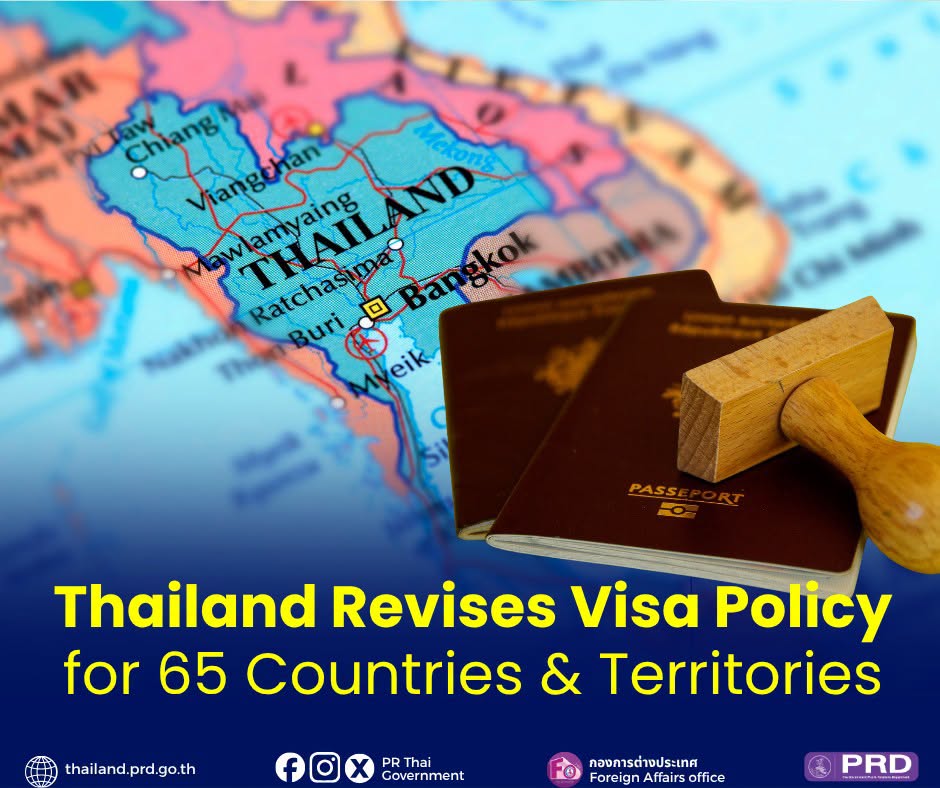
The Thai Cabinet has approved updated visa exemption and Visa on Arrival (VoA) measures that would replace the current 60-day visa exemption framework with nationality-based categories of 30-day visa exemption, 15-day visa exemption, or VoA. The five related Ministry of Interior draft announcements remain pending publication in the Royal Gazette and will take effect 15 days after publication.
WHY THIS MATTERS
The revised measures may affect business travel, short-term assignments, employee mobility planning, and tourism-related travel to Thailand. Human resources (HR), global mobility, and travel teams may need to review nationality-based entry eligibility before travel, particularly for travelers who currently rely on Thailand’s 60-day visa exemption framework. For mobile employees and frequent travelers, the proposed framework may shorten permitted visa-free stay periods for some nationalities and remove overlapping entry options. The planned changes to the Thailand Digital Arrival Card (TDAC) system also point to increased emphasis on traveler screening, entry and exit monitoring, and verification of the intended use of entry privileges
Key Highlights
- Royal Gazette publication and effective date: The five related Ministry of Interior announcements remain pending publication in the Royal Gazette. The measures are to take effect 15 days after publication. Until then, current entry conditions remain in place.
- Withdrawal of the 60-day visa exemption framework: The revised measure would withdraw the current 60-day visa exemption for 93 countries and territories. The new framework is intended to reflect current circumstances, prevent misuse of visa privileges, and apply the principle of “one country, one entitlement.”
- New single-category approach by country or territory: After the revised measures, 65 countries and territories will be covered under Thailand’s visa facilitation framework. Each country or territory will be assigned to one of the three categories only: 30-day Visa Exemption, 15-day Visa Exemption, or Visa on Arrival (VoA), streamlining the previous classification system and enhancing clarity for travelers.
- 30-day visa exemption category: Nationals of 59 countries and territories would be eligible for visa-free entry for tourism purposes for stays of up to 30 days. India, Croatia, Bulgaria, Cyprus, Malta, and the Maldives are included in this category.
- European Union alignment: The inclusion of Croatia, Bulgaria, Cyprus, and Malta means the 27 European Union (EU) member states would receive the same visa exemption treatment under the revised framework. This is intended to support international relations, discussions on Schengen visa exemption for Thai nationals, and related economic agreements.
- Eligibility shift for India: India’s eligibility would shift from VoA to 30-day visa exemption, and India’s VoA would be removed to eliminate overlapping visa privileges.
- Eligibility shift for Mauritius and Seychelles: Mauritius and Seychelles would be granted visa-free entry for tourism purposes for stays of up to 15 days.
- Visa on Arrival category: VoA at designated checkpoints would apply to nationals of Azerbaijan, Belarus, and Serbia.
- Treatment of entries before the effective date: Foreign nationals who enter Thailand before the revised measures take effect would be permitted to remain for the duration of their existing permitted stay.
- Continuation of bilateral and related arrangements: Separate bilateral and related entry arrangements would continue to apply where relevant, providing visa exemption periods of 90, 30, or 14 days, depending on the applicable agreement or arrangement.
- TDAC screening and monitoring changes: Relevant security agencies are expected to update the TDAC system to support traveler screening and verification of foreign nationals’ entry and exit records. The Government also states that TDAC changes would support background screening and monitoring of foreign nationals’ entry and exit.